Die-Cut vs Kiss-Cut Stickers: Which Format Fits the Job?
Compare individual die-cut stickers with kiss-cut sheets, then prepare the size, cut line, backing and quantity details needed for a clearer quote.
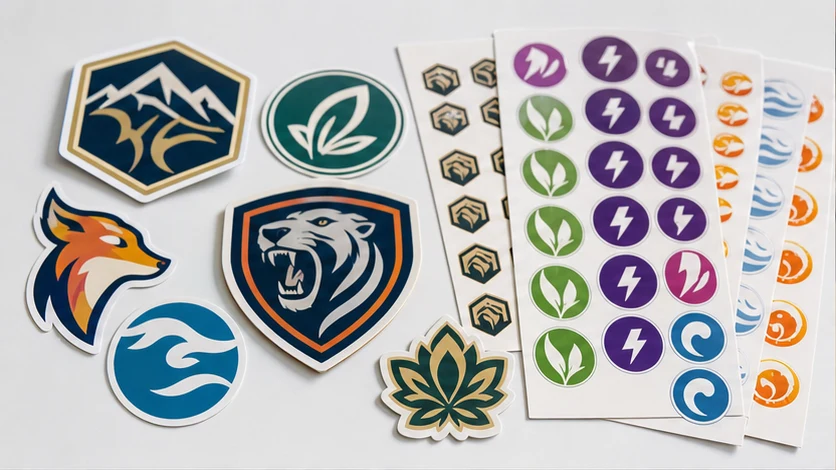
Two sticker quotes can use the same artwork and material but arrive in very different forms. One may be a stack of individually shaped stickers; another may keep several stickers on a rectangular sheet.
The useful choice is not which term sounds better, but how the stickers will be stored, handed out, peeled and applied.
A kiss-cut normally cuts through the printed sticker layer while leaving the backing sheet intact, so one or more stickers can be peeled from a sheet. A through-cut separates the sticker and its backing into an individual piece; this is often sold as a die-cut sticker. Because suppliers may use die-cut more broadly for custom-shaped cutting, confirm whether the quote is for individual pieces, sheets or rolls.
What matters most
- Choose the supplied format from the way people will handle and apply the sticker.
- Ask whether the backing stays as a sheet or is cut to the sticker’s outer shape.
- Show the required cut line instead of asking the printer to guess from the artwork.
- Keep important text and fine details away from the intended cut edge.
- Confirm size, quantity, material, finish and packing format for the actual job.
What is the practical difference between die-cut and kiss-cut?
With a kiss-cut sheet, the cut follows the sticker shape through the face material and adhesive layer, but the larger release liner remains intact. The surrounding waste may stay on the sheet or be removed, depending on the production arrangement. The result can hold one design, repeated copies or several related stickers on one backing.
An individually cut sticker has both the sticker and backing separated from the surrounding sheet. In everyday buying language this is commonly called a die-cut sticker, especially when the outer piece follows a custom outline. In production, however, die-cutting can describe a cutting method rather than one presentation format. Write the result you need: individual custom-shape pieces or kiss-cut stickers on sheets.
That wording prevents a common mismatch. A buyer may say die-cut to mean any custom contour, while a printer may need to know whether the backing must remain rectangular, follow the contour or stay on a multi-sticker sheet.
When do individual die-cut stickers make more sense?
Individual pieces are easy to count, insert into packs and hand out one by one. They can work well for promotional stickers, event packs, product inserts or counter distribution where the unpeeled sticker itself should look like a finished item.
The backing shape also affects handling. A close contour can look neat, but a small sticker or tight outline may be harder to peel without a split backing or an extra border. Ask how the proposed size, material and backing will be handled rather than assuming every shape will peel the same way.
When is a kiss-cut sheet more practical?
A kiss-cut sheet keeps small or delicate stickers together and gives the user a larger backing to hold. It is useful for sticker sets, product-labelling work, planners, instructions or packing stations where several stickers are applied in sequence.
How should the cut line be prepared?
Start with vector artwork where possible. Add a closed cut path that clearly shows the intended finished outline, and keep it separate from the printed design. Name the layer or spot colour according to the printer’s confirmed workflow rather than copying an arbitrary online setup.
Avoid highly jagged paths, tiny notches and narrow projections unless they serve a real purpose. A simpler contour is generally easier to handle and gives the artwork more breathing room. Keep logos, small text, QR codes and thin borders safely inside the proposed cut; the printer should confirm the actual clearance and cut tolerance for the material and process.
If no usable cut path exists, send the best original logo or artwork and describe the desired border. Seri Jadi’s print-artwork support can be scoped in the quotation, but revision count, cut-path preparation and final production suitability remain job-specific.
Worked example: six jar-seal designs
Imagine a small product range needs six round seals, each 35 mm wide. Staff will apply one seal after packing, and the six designs must stay grouped by flavour.
A useful decision would be a kiss-cut sheet containing labelled rows for the six designs. The larger backing keeps the set organised, while each seal peels from its own cut line. The quote brief should state 35 mm finished sticker size, quantity per design, total sheets, jar-lid surface, indoor storage, artwork status and whether the surrounding waste should be removed.
If the same seals were promotional giveaways placed individually into parcels, separate through-cut pieces might be easier to count and insert. The artwork can be similar, but the supplied format changes with the workflow.
Copy-and-send sticker cutting brief
For a current quotation, send the practical details below. Size, material, finishing, packing, artwork scope, price and timing are confirmed for the individual job.
- Use: product label, giveaway, packing or other.
- Supplied format: individual pieces, sheets, rolls or need advice.
- Finished sticker width x height, unit, shape and number of designs.
- Quantity per design and total quantity.
- Surface and indoor or outdoor conditions.
- Material or finish preference, if known.
- Cut path supplied: yes, no or unsure.
- Backing requirement and whether surrounding waste should remain.
- Artwork status, required date, fulfilment postcode and application-surface photo.
Frequently asked questions
Is every custom-shape sticker a die-cut sticker?
The term is often used that way in retail, but production terminology varies. State whether you need individual pieces, a kiss-cut sheet or a roll, and show the intended cut line. The supplied format matters more than relying on the label alone.
Can several sticker shapes share one kiss-cut sheet?
Yes, when the artwork and production method allow it. Give each finished size, quantity and required arrangement. Confirm whether the backing area, surrounding waste and any printed sheet label should remain.
Which format is easier to peel?
It depends on sticker size, shape, material, backing and how it will be used. A sheet gives small stickers a larger area to hold; an individual piece may need a practical border or backing feature. Ask for the proposed handling format before approving the quote.
Sources consulted
Sources support the general guidance; the final choice still depends on the actual job.
Send Seri Jadi the intended use, supplied format, finished size, shape, quantity per design, application surface, conditions, material preference, cut-path status, backing requirement, artwork status, required date and fulfilment postcode. Price, timing and production details are confirmed for the actual job.
WhatsApp 010-451 8088