How to Prepare a Clear Stationery Purchase List
Build a supplier-ready stationery list with item identifiers, units, pack details, quantities, substitutions and a copy-and-send request.
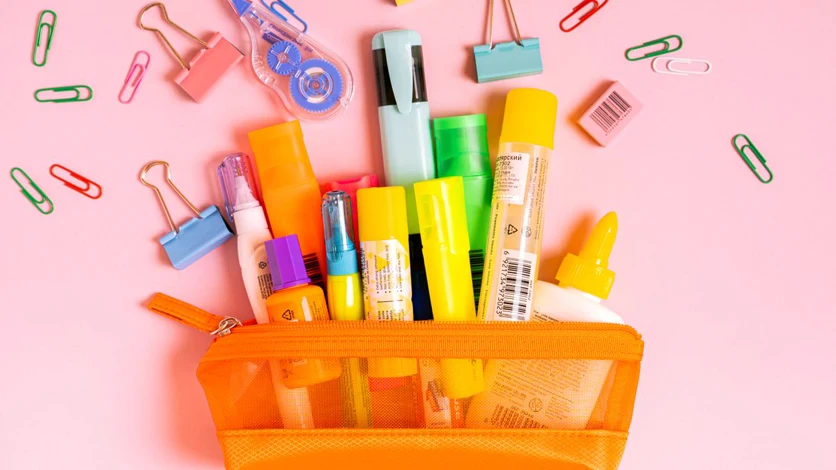
A stationery request often starts as a photo of an old invoice, a handwritten list or a message such as “blue pen, two boxes”. That may identify the general need, but it can leave the model, pack quantity and required unit unclear.
A supplier-ready list turns every line into a checkable item. It helps the buyer compare the response with the original request instead of resolving avoidable questions one message at a time.
For each stationery item, record the product name, brand or model when required, colour, size or specification, ordering unit, pack quantity, number of units needed and whether an alternative is acceptable. Add a required date and postcode only for the overall request. Attach a clear photo or old label when the exact item is difficult to describe.
What matters most
- Put one identifiable item on each line; do not combine several products in one description.
- Separate the ordering unit from the number inside a pack or box.
- Record model, size, colour and compatibility whenever a variation can change the item.
- State whether substitutes are allowed and which details must remain exact.
- Keep requested quantities separate from current stock and future reorder calculations.
What columns should a stationery purchase list include?
Use a table that can be read without opening several attachments. The fields below cover most ordinary office requests.
Do not fill a field with a guess. Write “please confirm” when the package detail is unknown, then attach the clearest available reference.
- Item: a plain product name that establishes the basic need.
- Brand or model: the exact identifier, or “open” when no model is required.
- Specification: colour, size, tip, paper weight or compatibility that distinguishes an important variant.
- Order unit: piece, pack, box, roll, ream or set.
- Pack detail: the number or size inside the unit, if known.
- Quantity: the number of order units required.
- Alternative: yes, no or the conditions that control substitutions.
- Reference: a photo, old label, SKU or product URL that helps identify an existing item.
How do you describe an item without knowing its product code?
Start with what affects use. For a pen, that may be ink colour, tip size and whether the ink must be permanent. For a file, record document size, file type, spine width and colour. For labels, include label dimensions, number per sheet or roll when known, printer model and intended surface.
A clear photo should show the complete item and readable packaging. Add a close view of the model number, barcode, dimensions or compatibility note. A photo alone can hide scale or pack quantity, so pair it with written details.
If you found the item in Seri Jadi’s public catalogue, include the product URL or SKU shown on the page. Current name, active status, price and stock still need to be checked from the live source.
Why must the unit and pack quantity be separate?
“Two boxes” is incomplete when different box counts exist. Write both the unit being ordered and what that unit should contain.
Compare an ambiguous line, “Black permanent marker — 2 boxes”, with a checkable line: “Black permanent marker, bullet tip, model open — box of 12 pieces — 2 boxes — equivalent allowed if tip and ink type match”.
The second line tells the supplier that the requested total is 24 pieces while keeping the quotation unit visible. This is a worked format, not a statement about a product Seri Jadi currently stocks.
Use the same method for reams, rolls, packets and sets. Never assume that a familiar brand uses one universal pack configuration.
Which details should remain exact when alternatives are allowed?
“Equivalent allowed” should not mean every specification can change. Mark the non-negotiable details.
For machine-related supplies, keep the device model and compatibility exact. For filing, document size and mechanism may matter more than colour. For whiteboard or permanent markers, ink type and intended surface cannot be treated as interchangeable. For batteries, record the required size and chemistry from the device or manufacturer guidance.
A useful alternative note might say: “Brand open; A4 size, 80 gsm, 500 sheets per ream and printer suitability must be confirmed.” The numbers are an example of list structure only, not a standing stock or product claim.
How should recurring and one-off items be separated?
Put routine office consumables in one section and occasional or custom items in another. This prevents a stamp, printed form or unusual project requirement from being mistaken for normal monthly stationery usage.
The related office stationery checklist for SMEs explains categories, actual consumption and reorder points. Use that guide to decide what and when to buy. Use this purchase-list format after the requirement has been approved and is ready to send for checking or quotation.
A worked purchase-list example
This example isolates unknowns instead of silently guessing them. The supplier can confirm each unknown in the quotation response.
- Ballpoint pen — existing model shown in attached photo — blue ink and stated tip size — box, pack count to confirm — quantity 3 — model change only after approval.
- Copier paper — brand open — A4 and machine suitability to confirm — ream, sheet count to confirm — quantity 10 — alternative allowed if confirmed before quote.
- Lever arch file — brand open — A4, stated spine width and black — piece — quantity 8 — colour may change but size may not.
Copy-and-send stationery request
Send one typed table, spreadsheet or set of clearly labelled photos. Ask the supplier to confirm each product, order unit, pack detail, quantity, current price and stock, and not to substitute items marked “exact”.
Browse Seri Jadi’s office stationery catalogue in Sungai Petani, use the A–Z product index to find a product reference, or send the list through the contact page. Current products, price, stock, fulfilment and timing are confirmed for the actual request.
- Company or request name.
- Required date, to be checked for the actual request.
- Shop collection or postcode, so fulfilment can be confirmed.
- The attached item list format: spreadsheet, typed table or photos.
- Any compatibility, size, colour, model or substitution detail that must remain exact.
Frequently asked questions
Can I send a handwritten stationery list?
Yes, if every line is legible and includes enough identifying detail. A typed table is easier to revise and compare, while clear packaging photos can support items with unfamiliar model numbers.
Should I list pieces or boxes?
Use the unit you want quoted, then state the expected count or size inside that unit. If the pack configuration is unknown, write “pack count to confirm” rather than assuming.
What if I will accept another brand?
Write which attributes must remain the same, such as compatibility, size, colour, tip or pack quantity. Ask for the proposed alternative to be identified before approval.
Sources consulted
Sources support the general guidance; the final choice still depends on the actual job.
Send Seri Jadi one item per line with its model or reference, specification, order unit, pack detail, quantity and substitution rules. Add the required date and collection or postcode. Current products, price, stock, fulfilment and timing are confirmed for the actual request.
WhatsApp +60 10-451 8088