Company Stamp Size: Fit the Wording Without Crowding the Proof
Choose a company stamp size by testing exact wording, shape and usable impression dimensions on a 100% proof before ordering.
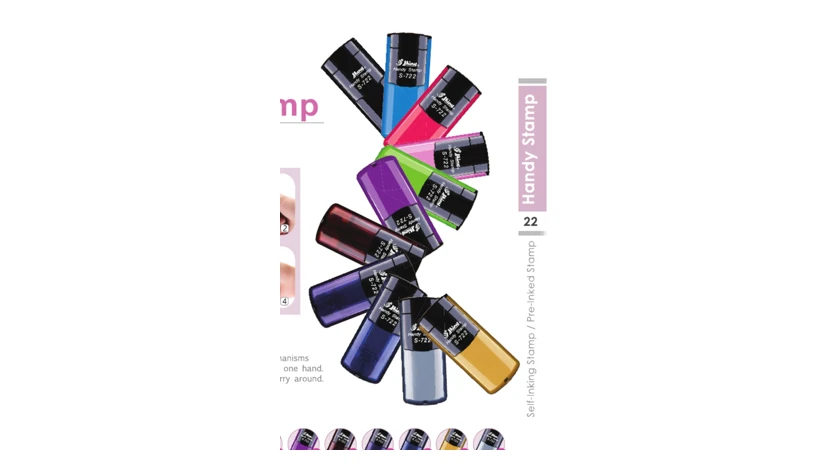
A company stamp can look spacious on an enlarged screen and become cramped when printed at its real impression size. The useful question isn't “What is the standard size?” but “What size keeps this exact wording clear in the shape and model available?”
Choose a company stamp size only after arranging the final wording at actual scale. Start with required text, remove optional lines, match the layout to a rectangle or circle, and print the proof at 100%. Select a stamp body whose usable impression area fits that approved layout. There is no universal size: content, logo detail, recipient requirements and available models all affect the choice.
What matters most
- Finalise the wording before choosing the stamp body.
- Match long text to a shape that uses space efficiently.
- Judge the usable impression area, not the outer casing.
- Print or measure the proof at 100% scale.
- Increase size only after removing unnecessary content.
Is there a standard company stamp size?
Not one that is safe for every company or document. A short name and registration number use less space than a long name, address, department and logo. A bank, agency, customer or internal form may also specify a shape, maximum area or required wording.
Confirm any recipient requirement first. Then treat model names and casing dimensions as product information, not as the impression dimensions. The quote and proof should state the actual width and height of the mark that will appear on paper.
Start with a text inventory, not a model number
Place every requested element into required, useful or optional groups. Use the exact spelling and punctuation from a current source. The related guide comparing rubber and self-inking stamps covers mechanism choice; this guide focuses on fitting approved content into a clear impression before a body is selected.
- Required: content confirmed by the document recipient or internal process.
- Useful: information that helps the stamp perform its job.
- Optional: a second contact route, decorative border or detail that can be removed if the proof becomes crowded.
Which shape fits the wording?
A wide rectangle usually uses space efficiently for a long company name, registration number and one address line. A square can suit short stacked wording or a compact symbol. A circle may work when the text is brief enough to follow the perimeter without forcing the centre details too small.
Do not choose a circle only because an old stamp was circular. Sketch the content in two shapes and compare the real-size proofs. The better option is the one that preserves hierarchy and leaves comfortable separation between lines, border and logo.
Use a four-step actual-size test
Set the proposed impression dimensions. Ask for the usable impression width and height in millimetres, then draw a box with those exact dimensions in the artwork or on paper. Do not measure the plastic body and assume the internal printing area is the same.
Arrange the content by reading order. Make the business name or action word the first thing a reader sees. Keep identifiers and supporting details below it, and do not shrink every line equally when one optional line is causing the problem.
Print at 100% scale. Export the proposed proof to PDF and print it without “fit to page” scaling. Measure the printed box with a ruler, read it at a normal desk distance and check whether letters, punctuation and numbers remain distinct.
Test the mark in context. Place the paper proof on a blank copy of the form or document. Check that it fits the available area without covering labels, signatures, boxes or other required information. A readable stamp can still be the wrong size for the document.
Worked example: long wording in a small circle
Suppose a requester wants a long business name, registration number, full address, two phone numbers, website and logo inside a 40 mm circular impression. A second draft places the business name, registration number and one necessary contact line inside a 60 × 30 mm rectangle.
The dimensions are illustrative, not standard recommendations. Print both layouts at 100%. If the circle forces the registration number and logo detail to become cramped while the rectangle keeps the confirmed content clear, the rectangle is the more practical starting point. If the recipient requires a circle, simplify the content or ask about a larger compatible model instead of hiding the problem in tiny text.
When should the stamp become larger?
Consider a larger impression when required wording cannot remain clear after optional content is removed, or when a necessary logo loses important detail. Also check whether the larger body still suits the document area, handling needs and intended frequency of use.
Bigger is not automatically better. A very large stamp can be awkward on small forms and may leave more opportunity for uneven pressure. The selected stamp type, model, impression area, ink and intended surface should be confirmed together for the job.
- Stamp purpose and document.
- Exact required wording and optional wording that may be removed.
- Logo file status and any recipient-required shape or maximum size.
- Available document space, width × height.
- Preferred shape and stamp type, or mark them as uncertain.
- Intended surface, quantity and required date.
- Request the usable impression dimensions on a 100% proof.
Frequently asked questions
Should I measure the stamp body or the impression?
Use the impression dimensions—the width and height of the mark transferred to the surface. The outer casing can be larger and does not tell you how much artwork fits inside.
Can a printer choose the size from my wording?
A printer can recommend a model after seeing the exact text, logo, intended use and any document limit. You should still check a dimensioned proof at 100% and confirm any recipient-specific requirement before production.
Is a round company stamp better than a rectangular one?
Neither shape is universally better. A round format can suit concise radial wording, while a rectangle often accommodates longer horizontal lines. Compare the same approved content in both shapes at actual size.
Sources consulted
Sources support the general guidance; the final choice still depends on the actual job.
Send Seri Jadi the stamp purpose, exact required and optional wording, logo file, recipient shape or size limits, available document space, preferred shape and type, intended surface, quantity and required date. Price, model, artwork work, timing and fulfilment are confirmed for the individual quotation.
WhatsApp +60 10-451 8088