How to Choose a Banner Size from Display Space and Viewing Distance
Measure usable display space, check viewing distance and prepare a clearer finished-size brief before requesting a banner printing quote.
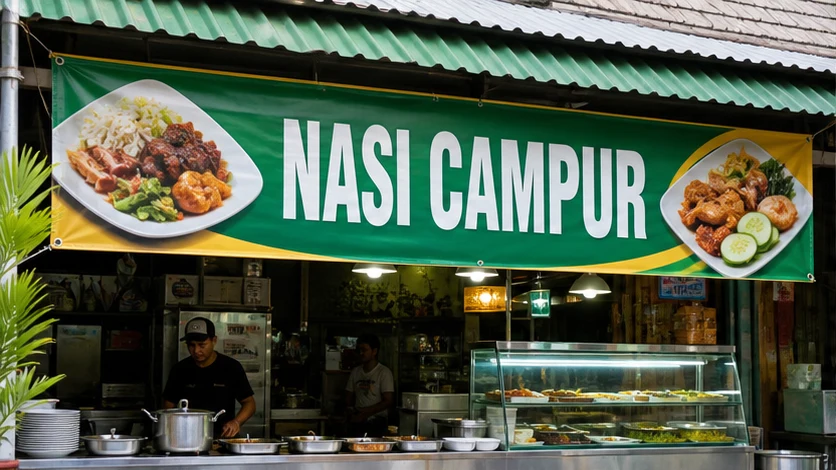
A banner can fail before printing if its size is chosen from a template rather than the place where it will be displayed. A shopfront, fence, registration table and stage backdrop each impose different limits on width, height, viewing angle and message length.
Choose the finished banner size by measuring the usable display space, checking where people will first see it, deciding how it will hang or stand, and fitting only the message that must be read there. Record width before height, include the unit, and send a wide photo with the measurements. Treat catalogue or template sizes as options, not automatic answers.
What matters most
- Measure the usable area, not the whole wall, fence or stage.
- Record finished width x height with a unit and mark estimates clearly.
- Choose the message before choosing an artwork layout.
- Check the first viewing point, nearby obstructions and likely mobile crop.
- Confirm material, finishing, artwork requirements and timing for the actual job.
What should you measure before choosing a banner size?
Start with one straight-on photo showing the complete display area. Add a second photo from the route people will use: the pavement, entrance, counter queue, audience area or vehicle approach. The photos explain dimensions that are easy to misunderstand in a message.
Measure the maximum usable width and height. Exclude doors that must open, windows that must remain clear, drainpipes, lights, signboards, fire equipment, projector screens and any part of a backdrop likely to be hidden by a table or people. For a fence or railing, note where the banner can actually be secured.
Write measurements as width x height, for example 240 cm x 90 cm. Do not send 240 x 90 without a unit. If the figure came from a photo estimate rather than a tape measure, label it approximate so it is not mistaken for a production dimension.
How does viewing distance change the decision?
The right question is not only whether the banner will fit, but what someone must understand from the first useful viewing point. A person standing near a registration desk can read more detail than a driver or pedestrian passing a shopfront.
If the primary, supporting and action messages cannot remain clear in the measured space, shorten the copy before enlarging the banner. A larger print does not repair an overcrowded message. The related sign-letter-size guide explains how to review lettering from real positions; this article focuses on the overall banner footprint.
- Primary: the event, offer, destination or business name.
- Supporting: one short date, benefit or instruction.
- Action: a phone number, location cue or other next step, only when needed.
Is there one standard banner size?
There is no single standard size that works for every display. A pre-set size may be convenient when it matches an existing stand or frame, but a custom shopfront, fence or backdrop should begin with the available space and purpose. A hanging banner, standing bunting, roll-up unit and stage backdrop do not share one interchangeable artwork shape.
Before settling on dimensions, record whether the banner will be indoors or outdoors, temporary or reused, tied to an existing frame, viewed straight on or from an angle, and supplied as one piece or several coordinated pieces. Seri Jadi can quote banners, bunting, roll-ups and backdrops, but the material, finishing and practical production route must be confirmed for the job.
Worked example: from shopfront space to a useful brief
Suppose a shop has a clear area measuring approximately 300 cm wide x 110 cm high. A door occupies the right side, and a light fitting reduces the usable width. After excluding both, the proposed banner area is 240 cm x 90 cm. People first see it from across the access lane rather than directly below it.
A useful brief would state: shopfront banner; proposed finished size 240 cm wide x 90 cm high; one piece; temporary outdoor display; first viewed from across the access lane; fixing points shown in attached wide and close photos; headline plus one short line; logo available; artwork not final; required date and postcode supplied for confirmation.
That brief is more useful than asking for a big banner because it separates the measured space, proposed size, viewing situation, message and artwork status. The printer can then flag missing details before quoting.
How should you check the artwork at finished proportion?
Keep the artwork in the same width-to-height proportion as the proposed banner. Do not stretch a square social post into a long shopfront layout. Ask for a proof that states the finished width and height, then check the headline, spelling, logo, phone number and any date or location.
View the proof as a small thumbnail. If the main message disappears at a glance, the hierarchy is probably too weak. Also check a centre crop for cards or social previews, while keeping all essential information visible on the full banner itself.
Images supplied for a large format should be checked against the final size and production method rather than judged only because they look sharp on a phone. Send the original file where possible and let the printer confirm whether it is suitable. Do not rebuild a logo from a screenshot.
Copy-and-send banner-size brief
Send the banner use, proposed finished width x height and unit, whether the measurement is measured or approximate, quantity, indoor or outdoor use, first viewing point and direction, existing frame or fixing points, obstacles, exact headline and supporting line, logo and original-image availability, artwork status, required date, postcode, and wide and close photos.
For a current quotation, send the brief through Seri Jadi's banner and bunting printing page or contact page. Price, completion date, artwork scope, material, finishing, collection, delivery or installation remain specific to the quoted job and postcode.
Use the quote planner to organise these details. Review the draft before choosing to send it; add photos when you contact Seri Jadi.
Frequently asked questions
Should the banner fill the whole available space?
Not automatically. Leave clear areas for doors, lights, frames, safety equipment and fixing points. The main message also needs breathing room. Measure the usable area first, then choose a proposed finished size that can be produced and fixed appropriately.
Can I use the same artwork for a banner, bunting and backdrop?
The same campaign can guide all three, but each format has a different shape and viewing situation. Recompose the layout for the actual dimensions instead of stretching one file.
What measurements should I send for a banner quote?
Send finished width x height with the unit, quantity, indoor or outdoor use, display method, viewing point, artwork status, required date, postcode and wide photos of the display area. Mark any measurement that is only an estimate.
Sources consulted
Sources support the general guidance; the final choice still depends on the actual job.
- Google Autocomplete Malaysia: saiz banner
- Banner and bunting printing in Sungai Petani — Seri Jadi
- Cetak banner dan bunting di Sungai Petani — Seri Jadi
- How viewing distance changes sign letter size — Seri Jadi
- How to photograph and measure a shopfront for a signboard quote — Seri Jadi
- Seri Jadi English blog index
- Seri Jadi Bahasa Malaysia blog index
Send Seri Jadi the proposed finished width and height with units, quantity, indoor or outdoor use, display method, viewing point, artwork status, required date, postcode and wide photos. Material, finishing, price, timing and fulfilment are confirmed for the actual job.
Prepare my banner brief WhatsApp +60 10-451 8088