Shop Signboard Design: Decide What Must Be Read First
Set the business name, descriptor and optional contact detail in a clear reading order before approving a shop signboard design.
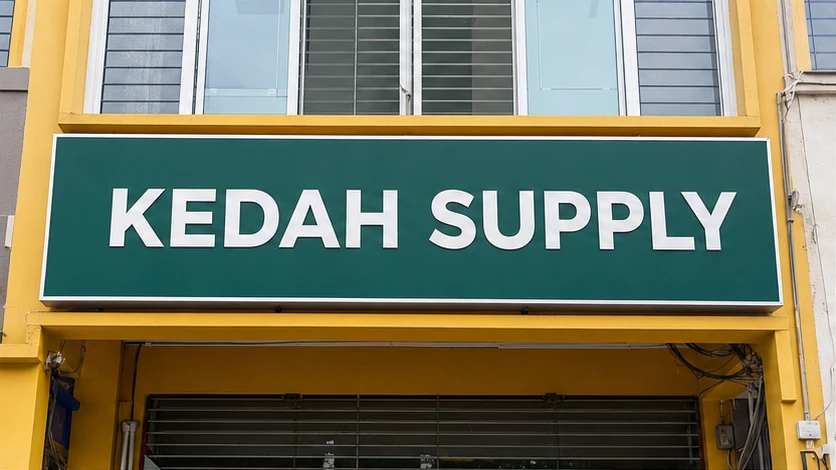
A shop sign can contain a name, logo, tagline, phone number and several decorative effects, yet still fail to communicate one clear thing. Before choosing fonts or materials, decide what a passer-by must recognise first.
Start a signboard design with a reading order: primary identifier, supporting descriptor, then optional contact detail. Fit that order to the real sign area and main viewing position. Test a simple proof before adding effects. A sign maker still needs the site photo, dimensions, logo files, lighting preference and installation details to confirm artwork, construction, price and timing.
What matters most
- Give one element clear first priority.
- Keep the descriptor shorter than the business name.
- Treat contact details as optional, not automatic.
- Test the layout at realistic scale and distance.
- Approve wording and construction as separate, linked decisions.
What should a shop sign communicate first?
Usually, the first job is identification: the business name or the name customers are expected to look for. A short descriptor can explain the category when the name alone is unclear. Other information belongs lower in the order.
Write the content as three levels before opening design software. This is a planning method, not a rule that every sign needs three levels. A recognised name and logo may need no descriptor. A roadside sign with a long phone number may become less useful if the extra line weakens the main identifier.
- Priority 1 — identify the business, for example: BUSINESS NAME.
- Priority 2 — explain what it is if needed, for example: PRINTING & STATIONERY.
- Priority 3 — support the next action only if readable, for example: 010-XXX XXXX.
How much wording belongs on the signboard?
Use a message budget. First write every requested item, then mark each as essential, helpful or available elsewhere. Keep the sign for what must be recognised from its main viewing point. Opening hours, a complete service list, social handles and promotional copy can often sit on a window, door, directory or digital channel instead.
Avoid shrinking all text equally to make everything fit. That preserves every word but removes hierarchy. Reduce the message first, then size the remaining levels from the available area and real viewing situation.
How do logo shape and sign area affect the layout?
A wide fascia, square panel and vertical projecting sign cannot use the same arrangement unchanged. Record the available width and height with units, then compare that ratio with the logo. A tall logo placed beside a long business name may leave too little width for readable lettering.
Ask for alternative approved logo arrangements if they exist: horizontal, stacked, symbol with wordmark, or wordmark alone. Do not redraw or distort the logo merely to fill the panel. If only a screenshot or flattened image is available, state that clearly so file inspection or artwork rebuilding can be quoted rather than assumed.
A practical three-view proof test
Prepare a plain proof with the proposed sign boundary, exact wording and approximate logo proportion. Test it in three views before deciding that decorative effects will solve the layout.
These tests help expose a weak reading order. They do not determine structural capacity, exact letter size, final colour, lighting, material or installation safety; those remain site- and job-specific.
- Thumbnail view: shrink the full sign until details become difficult. Check which element remains recognisable first.
- Site-photo view: place the proof approximately on a straight-on photo. Check whether the main identifier competes with windows, neighbouring signs or the building colour.
- Actual-size strip: print or display one critical line at 100% scale where practical. Check letter shape, spacing and whether fine strokes survive the intended production method.
Worked example: reduce six requests to three levels
A rough request might contain: Kedai Maju Jaya Trading — printing, stationery, stamps, gifts and office supplies — since 2012 — WhatsApp — phone number — Facebook handle.
A clearer first proof could prioritise MAJU JAYA, then Printing · Stationery · Stamps, then WhatsApp 01X-XXX XXXX.
The exact name and services above are fictional placeholders, not a customer or Seri Jadi project. The point is the editing method: preserve the identifier, combine the most useful descriptor, and remove details that do not earn their space. A second proof could omit the phone line entirely and compare which version identifies the shop more clearly.
Keep artwork and sign construction connected
Message hierarchy is only one part of the brief. Raised letters, a printed panel, a lightbox and individually illuminated letters can handle fine detail differently. The artwork proof should show wording, logo, colours, dimensions and reading order. The quotation should separately describe the face, letters, backing, lighting, mounting, installation and exclusions.
Before approval, compare both documents together. A visually attractive proof is incomplete if the finished size or construction is unclear. A detailed construction quote is also incomplete if the final wording and logo arrangement are not approved.
Copy-and-send signboard design brief
Send the brief through Seri Jadi’s signboard and signage page or contact page. The physical shop is in Sungai Petani. Final artwork scope, sign construction, installation, price, timing and fulfilment are confirmed for the individual job.
- Site address or postcode.
- Available sign area, width x height and unit.
- Main viewing point: walking, car park, road or indoor.
- Primary identifier that must be read first.
- Short descriptor, if required, and optional contact detail.
- Whether original logo files and approved brand-colour references are attached.
- Preferred sign type or effect, and whether lighting is needed.
- Site and mounting photos.
- Required date for confirmation.
- Ask for artwork, construction, lighting, mounting, installation and exclusions to be stated separately.
Frequently asked questions
Should a shop signboard include a phone number?
Only when it supports the sign’s real job and remains readable without weakening the business name. Compare a proof with and without it. Contact details can also sit on a window, door or digital listing.
Can a long service list fit on the main signboard?
It may fit physically but still create a weak reading order. Group services into a short descriptor and move the full list to another surface or channel. The primary identifier should not become the smallest compromise.
Should the logo or business name be larger?
It depends on how the brand is recognised and what the logo contains. Test approved logo arrangements against the sign ratio and viewing position. Do not distort the logo or assume the symbol alone is familiar.
Sources consulted
Sources support the general guidance; the final choice still depends on the actual job.
- Google Autocomplete Malaysia — signboard design
- Signboard Sungai Petani — Seri Jadi
- Papan Tanda Sungai Petani — Seri Jadi
- Shop Signboard Colour and Contrast — Seri Jadi
- Warna Papan Tanda Kedai dan Kontras — Seri Jadi
- Article structured data — Google Search Central
- Seri Jadi-controlled illustrative shopfront sign visual
Send the item, sign dimensions, quantity if relevant, artwork status, required date, site photos and installation postcode through Seri Jadi’s signage or contact page for a job-specific quotation.
WhatsApp +60 10-451 8088